Why Customers Walk Past Your Store — The Psychology Behind Low Capture Rates
May 29, 2026
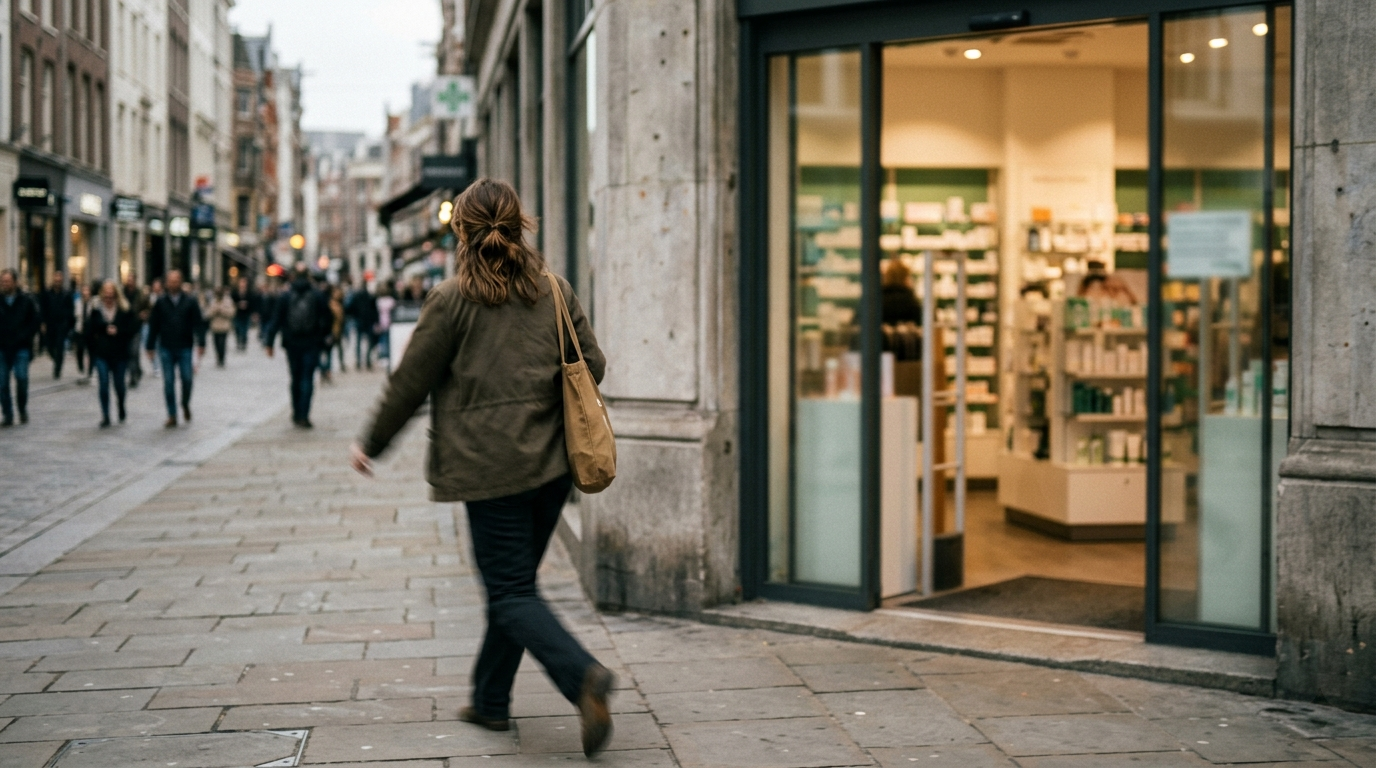
Every day, retailers lose customers before they ever enter the store. Not because of poor service, the wrong assortment, or a bad location — but because something stopped people at the door. They were there. They glanced at the window. Some even slowed down for a moment. And then they kept walking.
This is not an edge case. It is one of the most consistent and least-measured losses in retail — and for most businesses, it happens dozens or hundreds of times a day.
What is the capture rate and why does it matter?
In retail analytics, this gap is measured as the capture rate: the percentage of passersby who actually step inside. Its counterpart, pass-by footfall, counts the total number of people walking past a location. When pass-by footfall is high but capture rate is low, something is preventing entry at the exact moment of decision.
As Retail Sensing (2025) notes in its footfall analytics research: a high pass-by count with a low capture rate is not random noise — it is a signal that something is deterring potential customers from entering. And according to Sensormatic's ShopperTrak data, which covers over 40 billion shopper interactions annually, fewer than half of all retailers currently track this gap. Most are optimizing the wrong end of the funnel.
Ariadne's retail analytics research (2026) puts it plainly: a falling capture rate points directly at the frontage and the offer — not at in-store execution.
The decision happens before the door
What makes this especially important is that the decision not to enter is not a considered, rational evaluation. It is fast, often subconscious, and made while the person is already in motion.
People do not stand in front of a store and think: "Do I want to explore this assortment and evaluate its relevance to my needs?" Instead, the brain runs a much simpler check: "Do I want to deal with this right now?" That question is answered in seconds — and the answer depends entirely on what the storefront communicates before the customer has taken a single step inside.
This means that a customer can be genuinely interested in what a store sells and still walk past. The problem is not awareness or relevance. The problem is the anticipated experience of entering.
7 psychological reasons why customers walk past
Before a customer enters, their brain runs a rapid subconscious simulation: what will happen if I step inside? How much will this cost me — in time, money, energy, or social discomfort? Research across behavioral economics, consumer neuroscience, and retail psychology has identified seven core mechanisms that drive this simulation — and all of them form outside, in seconds, before any real experience begins.
1. No time: time pressure and cognitive load
The most common reason customers give for walking past is simple: they are in a hurry. But the psychology runs deeper than that.
Under time pressure, the brain does not just speed up — it changes how it processes information entirely. Pieters & Warlop (1999), in a landmark eye-tracking study, showed that time-pressured consumers accelerate their visual scanning, filter out text-based information, and shift to fast, image-based signals. Consumer neuroscience research (iMotions, 2025) confirms this: when cognitive load is high, visual salience overrides normal decision-making. The brain responds only to what immediately grabs attention — everything else disappears.
Retail implication: A storefront that doesn't communicate its core value within two seconds of glance time loses the time-pressured customer — regardless of what it offers inside.
2. No motivation: inaction inertia and status quo bias
Sometimes customers are not in a hurry. They simply keep walking because stopping feels like it requires a justification — and the default is always to continue.
This is what psychologists call inaction inertia and status quo bias. In a foundational review, Anderson (2003) identified four forms of decision avoidance — choice deferral, status quo bias, omission bias, and inaction inertia — all driven by the same mechanism: the brain defaults to doing nothing when the benefit of acting is not immediately obvious.
Retail implication: Ambiguity always favors inaction. The storefront must give the passing customer a clear, immediate reason to deviate from their default path — or they won't.
3. Tired, hot, or mentally drained: decision fatigue
A customer who has already been shopping for an hour is not the same customer as one who is freshly energized. The state of their mental resources directly affects their willingness to start something new.
A 2023 study published in Nature Neuroscience found that prolonged decision-making leads to measurably reduced activity in the prefrontal cortex — the region responsible for executive function. A companion study by the National University of Singapore (2023) found that consumers later in the day are significantly more likely to choose default options or make low-effort decisions. For specialty retail, this is directly relevant: a fatigued customer's bar for entering a new store is higher — not because of what the store sells, but because of how they feel at that moment.
Retail implication: Reduce the cognitive cost of entry. The simpler and clearer the storefront message, the lower the threshold for the tired customer.
4. Fear of being approached: social anxiety in retail
For a significant share of consumers, the decision not to enter is driven not by time or energy, but by the anticipation of social interaction.
In a qualitative study of consumers with social anxiety, Delacroix & Guillard (2016) found that too much closeness from sales staff creates a genuine burden — psychological, economic, and temporal — that many customers choose to avoid entirely. These consumers prefer neutral, anonymous interactions. A store that visibly signals attentive personal service is one they will walk past.
The scale of this effect is substantial. Research in the Journal of Retailing and Consumer Services (2022) estimates that social anxiety affects around 36% of the young adult population globally. Roughly one in three potential customers has some degree of reluctance about entering a store where staff interaction feels unavoidable.
Retail implication: Storefronts that signal low-pressure, self-directed browsing reduce this barrier for a third of all passersby.
5. Too crowded: personal space and interpersonal distance
Visible crowding — inside the store or at the entrance — is a documented deterrent to store entry. Research on interpersonal distance and retail avoidance, drawing on the work of Hall (1966) as applied in retail contexts, shows that low interpersonal distance increases avoidance behavior and decreases purchase-relevant consumer activity.
This is reinforced by what researchers call sociofugal situations: environments where people primarily seek to avoid social interaction. Many pedestrians on a busy shopping street are already in this state. A store that looks visually dense or crowded confirms their avoidance instinct before they reach the door.
Retail implication: Visible store interiors and window displays should signal space, calm, and ease — not density or busyness.
6. Fear of spending: loss aversion
Even customers with no purchase intention may avoid entering because of an unconscious awareness that entering creates exposure to spending.
This is rooted in one of the most robust findings in behavioral economics. Kahneman & Tversky (1979), in their foundational Prospect Theory research, demonstrated that the psychological pain of a potential loss is approximately twice as powerful as the pleasure of an equivalent gain. Applied to retail: the mere prospect of spending — even if no purchase is made — generates anticipatory discomfort. Entering the store creates exposure to that discomfort.
Retail implication: A storefront that communicates 'you can browse freely, with no obligation to buy' directly reduces this barrier. Perceived freedom lowers the perceived risk of entry.
7. The storefront says nothing: visual salience
The final psychological reason is perhaps the most directly actionable: the storefront fails to create a compelling reason to stop.
Visual salience research consistently shows that attention is not randomly distributed — it is drawn to stimuli that are unexpected, contrast-rich, or personally relevant. Wästlund et al. (2014) found that in retail environments, the act of looking longer at something is the strongest predictor of purchase — stronger than stated preferences or brand loyalty. Attention precedes everything.
More specifically, Kalantari et al. (2022) found that storefront window display transparency directly influences approach behavior: customers who can see inside the store and find the visual appealing are measurably more likely to enter.
Retail implication: A window that creates visual interest and communicates something worth stopping for is not just an aesthetic choice — it is a conversion mechanism.
The barrier no storefront design can solve
The seven reasons above are all psychological. They form in the customer's mind — shaped by expectations, mood, cognitive state, and the signals the storefront sends. In principle, each of them can be reduced by better design, clearer messaging, and lower-friction entry cues.
But there is an eighth reason customers walk past that no amount of storefront improvement can address:
The store is closed.
Purchase impulses do not follow business hours. They arise on Sunday evenings, during a lunch break, on the way home from work, or spontaneously while passing by. When the need is there but the store is shut, the moment is gone and it leaves no trace in any analytics system.
This barrier is categorically different from the other seven. It is not a perception problem or a psychology problem. It is a structural problem. This requires a structural solution: availability at the moment the customer is ready, not at the moment the store chooses to be open.
For non-food specialty retail — drugstores, cosmetics stores, confectionery boutiques, electronics and lifestyle brands — this gap is particularly significant. These are categories where the purchase impulse is often spontaneous and time-sensitive. A customer who wants a specific product on a Sunday afternoon will not wait until Monday morning. They will find another way.
What all 8 reasons have in common: anticipated friction
Looking across all eight reasons (seven psychological, one structural), a common pattern emerges. In every case, the customer is not evaluating the product or the brand. They are evaluating the anticipated cost of engaging with the store.
We define this as anticipated friction: the subconscious expectation of effort, cost, social pressure, time loss, or unavailability that stops a customer before they reach the door. It is shaped entirely by what they can perceive from outside and by whether the store is accessible at all.
Anticipated friction is not about the store itself. It is about what the store appears to promise — or to cost — in the three seconds before the decision is made.
This distinction matters because it defines where the solution must be applied. Improving in-store experience, staff training, or product range has no effect on anticipated friction. The customers lost to it never reach the point where those investments matter.
The largest untapped opportunity in non-food retail
There is a well-known statistic in retail: even among customers who do enter, a significant proportion leave without buying. Research by Retail Dive and Forrester (2024) puts average in-store conversion rates at 25–45% — meaning 55–75% of store visitors leave empty-handed. Experian FootFall suggests this figure can reach 70% in standard retail formats.
These are the customers retailers know about and optimize for. But the customers who never enter — and those who arrived when the store was closed — are invisible. They showed interest. They were physically present. And they dropped out at the only stage that leaves no trace.
The customers who never enter are not just lost conversions. They are invisible lost opportunities and the gap is larger than most retailers realize.
For non-food specialty retailers (drugstores, cosmetics stores, confectionery boutiques, gift shops or lifestyle brands), the stakes are particularly high. These are categories built on browse behavior and impulse. Every passerby who almost stopped, and every customer who arrived when the store was closed, is a customer the store never had the chance to serve.
What frictionless store entry actually looks like
Understanding the eight barriers is one thing. But for retailers, the more practical question is: what does a system that actually eliminates them look like in practice?
The answer is not a better window poster or a friendlier sales assistant. Those interventions work at the margins of the seven psychological barriers. They do nothing for the structural one. What eliminates anticipated friction at its root is a fundamentally different kind of entry experience — one that removes the perceived costs of engaging with the store before they can form, and that is available whenever the customer is ready.
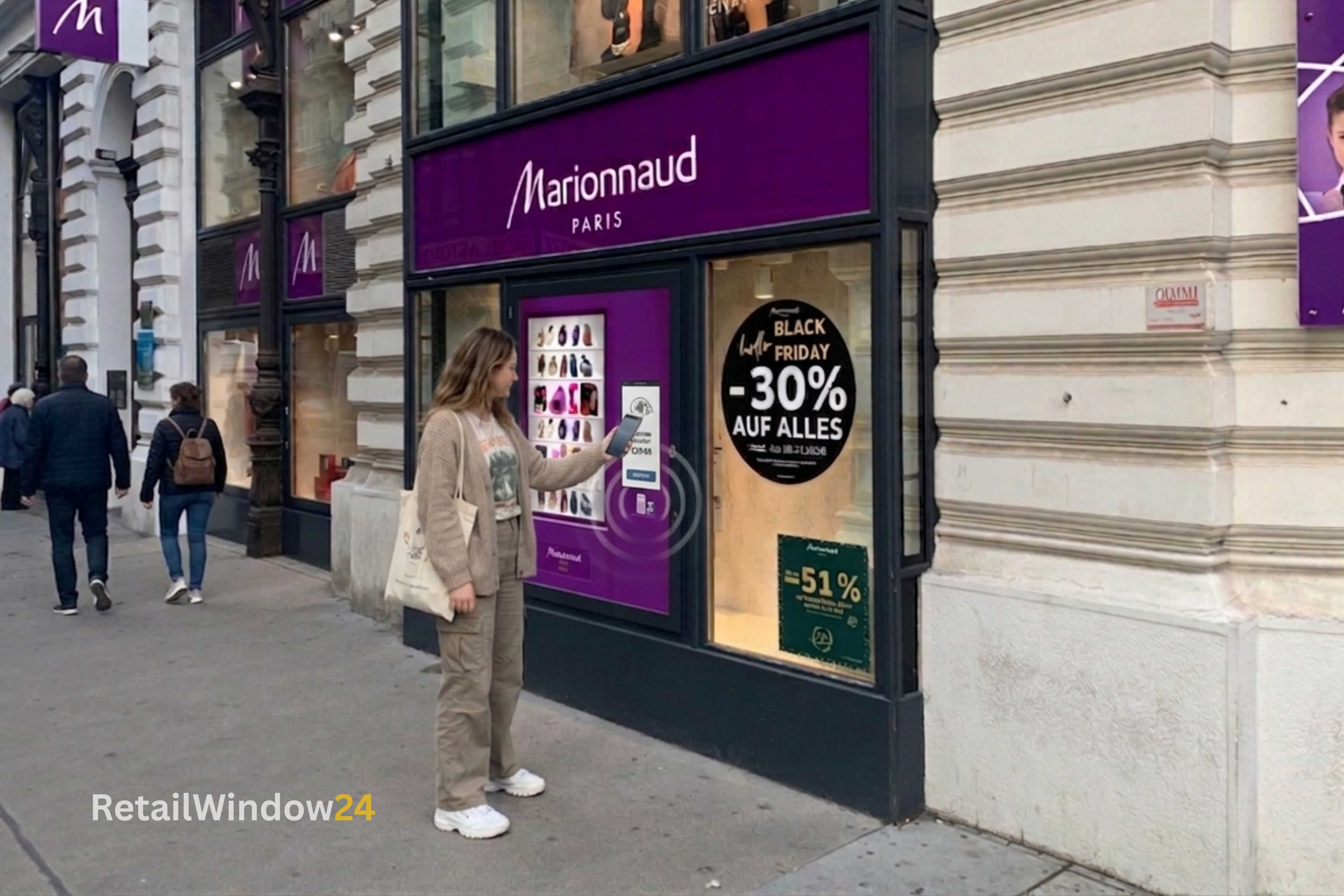
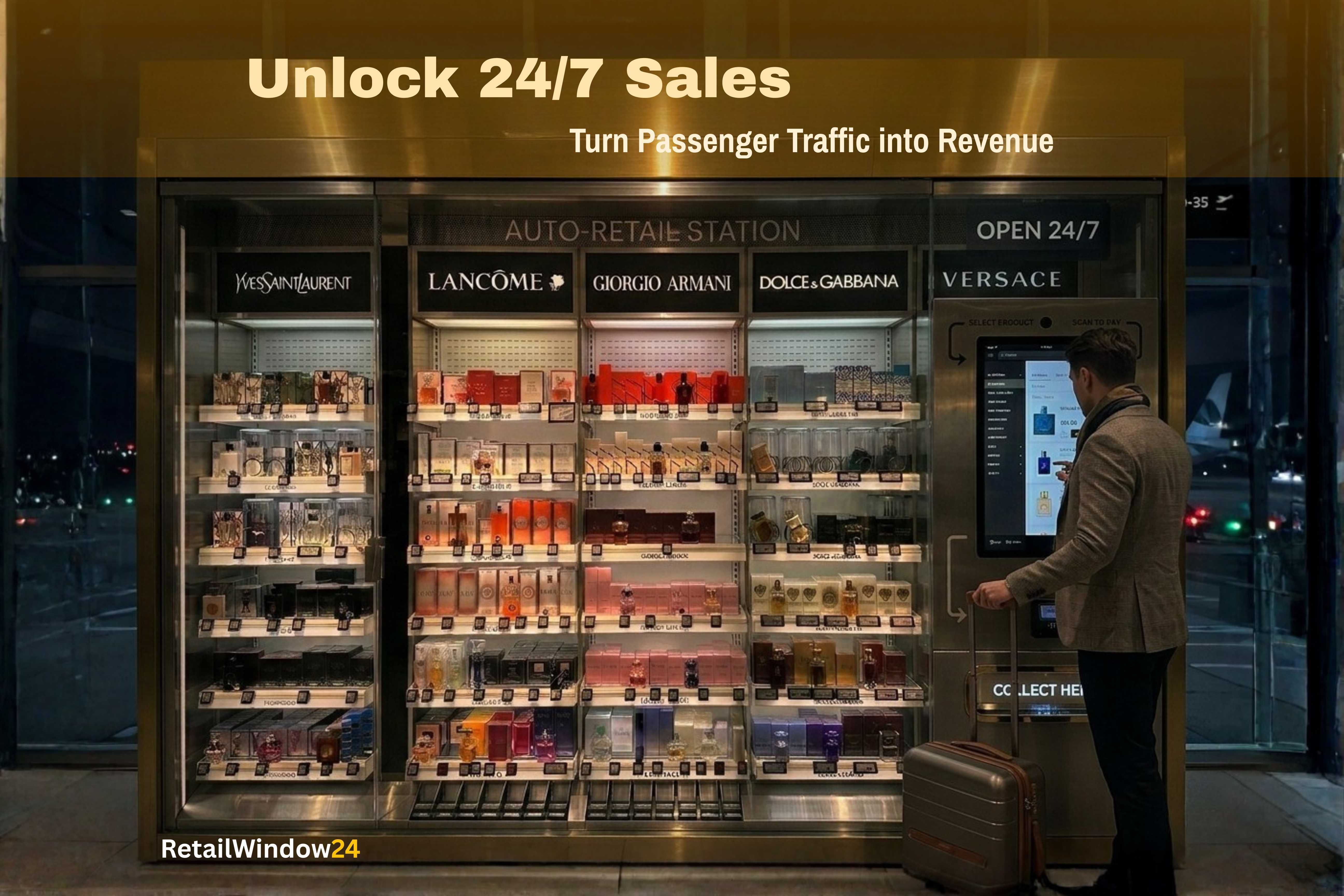
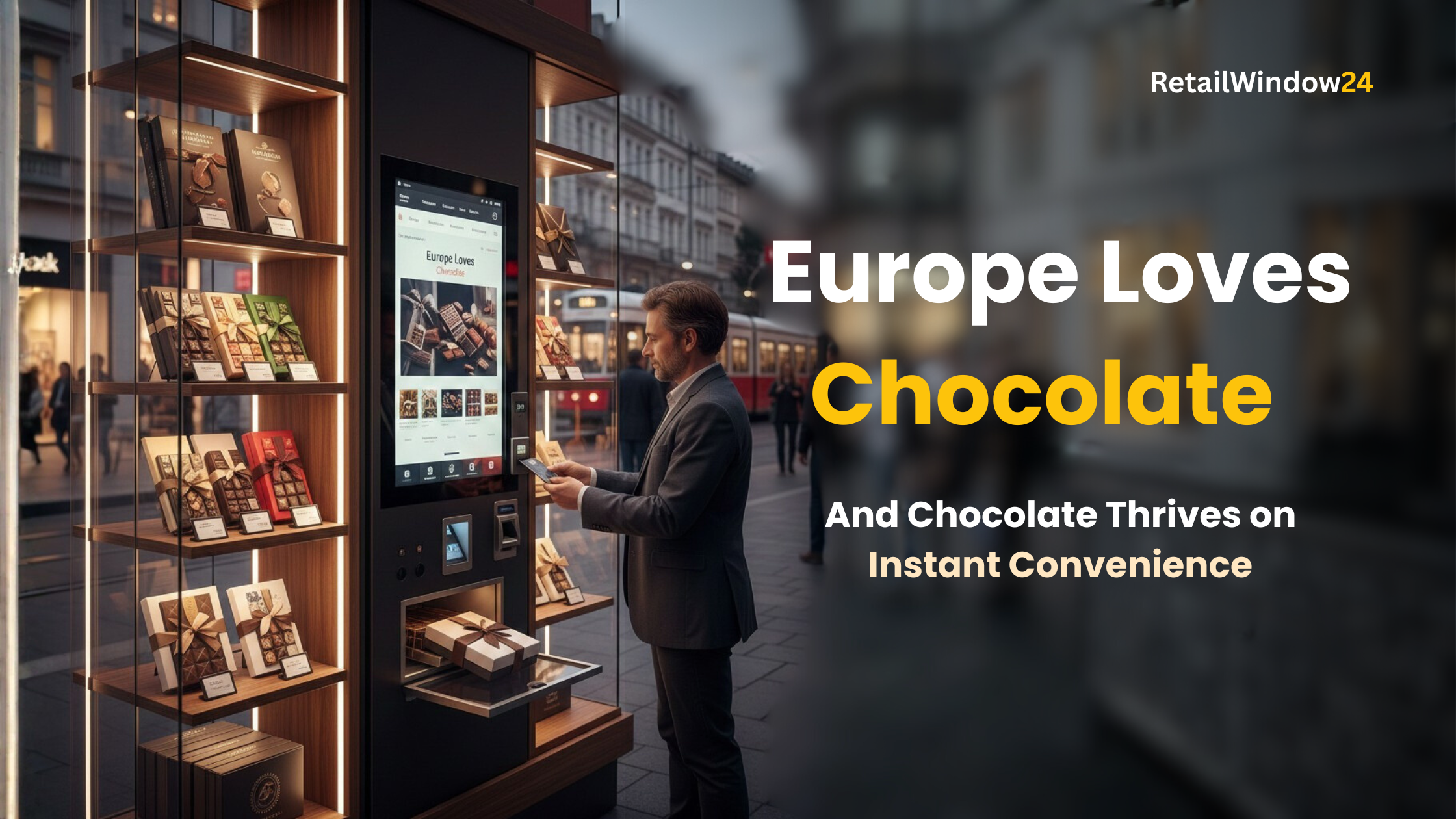
In practical terms, this means: no staff interaction required. No queue. No commitment to a sales conversation. No closing time. A touchscreen interface — intuitive as an online shop — through which a customer can browse, select, pay, and receive their product in under 60 seconds. Available 24 hours a day, seven days a week. No social obligation, no time pressure, no loss exposure beyond the specific item chosen.
Each of the eight barriers maps directly onto what this kind of system eliminates:
- No time: product in hand in under 60 seconds - faster than any staffed checkout
- No motivation: a self-service touchscreen with an online-shop interface - the lowest possible barrier to starting a transaction
- Decision fatigue: a clear, structured product interface that works even for tired customers - no cognitive overhead required
- Social anxiety: no staff, no contact - the 36% of customers with social anxiety can browse and buy completely anonymously
- Crowding: autonomous operation means no queue, no density, no interpersonal pressure at the point of purchase
- Loss aversion: transparent pricing on screen, no sales pressure - full control stays with the customer at every step
- No visual salience: the system itself is a lit, digital, interactive display - it is the storefront signal, not just a decoration of it
- Closed opening hours: 24/7 availability - the purchase impulse is no longer limited by the store's schedule
This is not a theoretical concept.
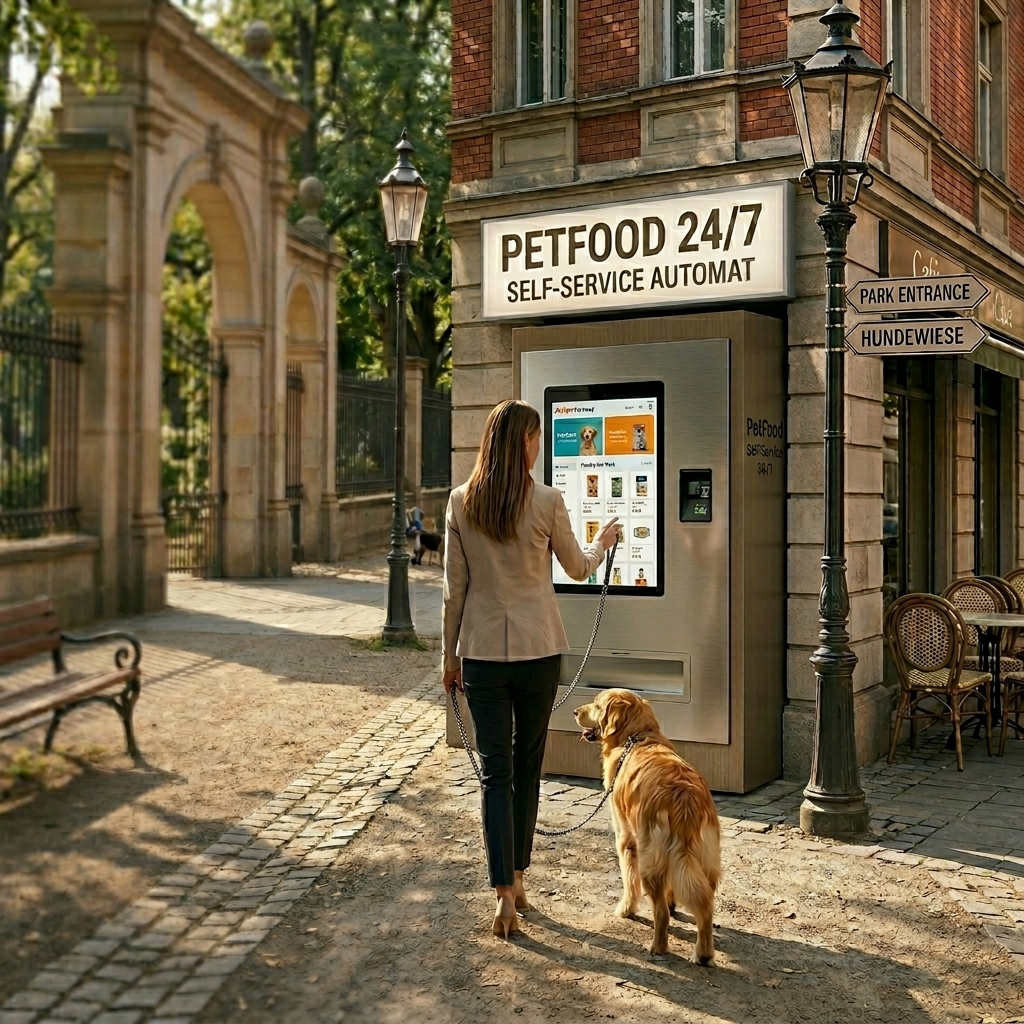
RetailWindow24 develops 24/7 self service technologies, for and with customers in non-food retail environments across Europe (such as: pet food, pharma, cosmetics, wellness, electronics, daily care).
What exactly is RetailWindow24?
24/7 Self-Service Retail Systems
RetailWindow24 is a self-service retail system that operates around the clock — no staff required, no closing time, no friction. Customers browse, select, pay, and receive their product in under 60 seconds, at any time of day.
Modular and high-capacity, supporting up to 1.000 SKUs and 10.000 units. Integrates into the existing shopfloor, stocked from the inside of the shop, modular and expandable as your business grows.
RetailWindow24 is not just a solution for servicing customers who would otherwise be lost - it is a genuine revenue opportunity with an excellent return on investment.
Discover the future of retail now with RetailWindow24
Frequently asked questions
- What is capture rate in retail?
The capture rate is the percentage of people who walk past a store who actually step inside. A high pass-by count with a low capture rate indicates that something at the storefront level is preventing entry - not lack of awareness or interest. As Ariadne (2026) notes: "Falling capture rate points at the frontage and offer."
- What is anticipated friction in retail?
Anticipated friction is the subconscious expectation of effort, social pressure, time cost, financial risk, or unavailability that forms before a customer reaches the store door. It is shaped by storefront signals and opening hours and determines whether a customer chooses to enter or continue walking. It is distinct from in-store friction, which only affects customers who have already entered.
- Why do customers not enter a store even when they are interested?
Research in consumer psychology identifies seven psychological mechanisms: time pressure, inaction inertia, decision fatigue, social anxiety, crowding avoidance, loss aversion, and absent visual salience. A further structural barrier — closed opening hours — means the store is simply unavailable when the customer impulse arises. In every case, the deciding factor is the expected cost of engaging with the store, not the actual content of what it sells.
- How can specialty retailers improve their store capture rate?
Addressing the psychological barriers requires clear and visually salient window displays, transparent store interiors, low-pressure entry signals, and simple storefront messaging that works under time pressure. Addressing the structural barrier requires 24/7 availability - a self-service system that operates independently of opening hours and staff availability.
- What is the difference between footfall and capture rate?
Pass-by footfall measures the total number of people walking past a location. Capture rate measures the percentage who actually entered. Footfall tells you about traffic volume; capture rate tells you about storefront effectiveness. The gap between them is where the largest untapped opportunity in retail sits.